

Essential Planning Strategies for Successful Self-Storage Development Projects
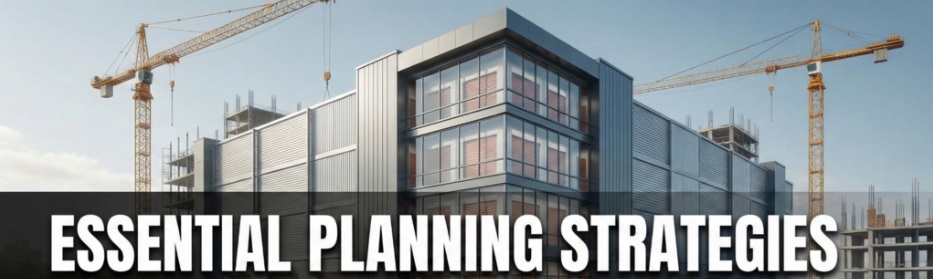
The self-storage business is growing quickly because of our changing population, cities getting bigger, and the way people use things. Site planning is the difference between a successful project and one that is riddled with operational issues and underperforms. Whether it’s building a new facility from scratch or expanding an existing portfolio, expert site planning is key.
Understanding Market Fundamentals
RealEstateRama features property press releases from over 2000 government as well as nonprofit sources, it is an example of both the complexity and size of a real estate development. When working on a self-storage project the market analysis conducted must effectively assess existing supply, demographics, and economics in the trade area.
Top notch developers always do a detailed competition analysis. This requires going to existing places or buildings, looking at the prices, sizes and strengths and weaknesses. Through mystery shopping exercises, we come to know our competitors and what they offer to the potential customers. Informs site selection, unit mix, and pricing strategies.
Research on demographics lets sellers see potential customers. Important measurements are population density, median household income, home ownership, business density and residential mobility. Places that are growing in population or where new homes and businesses are built usually need more space for self-storage facilities. On the other hand, a facility can be good but if the population is declining or the market is saturated, the risk is great.
Site Selection Criteria
A self-storage facility needs a good location in an urban area to ensure success.
Self-storage facilities can work in many areas. This is unlike multifamily or retail properties where a location premium is clearly established. But for it to work, certain criteria must be satisfied. Besides, these criteria must align with the target customer profile.
Location factors include visibility and accessibility amongst the most important. Locations along main roads that have high amounts of traffic get brand exposure. Easy entry and exit is particularly important because customers frequently visit facilities to retrieve their belongings. Difficult traffic patterns, bad turns or locations on secondary roads lessen convenience and lessen competitive position.
Self storage site planning, there are numerous technical issues that require expertise. Topography significantly impacts development costs. Level sites minimize grading costs and drainage problems. Meanwhile sloped sites might require a lot of earthmoving that reduces profit margins. Geotechnical studies identify soil conditions that influence foundation design and construction methods.
The availability of utility infrastructure affects budgets and timing for development. Sites that have water, sewer, electricity, and telecommunications cut soft costs and speed the project up. Properties needing utility upgrades or infrastructure additions incur extra costs and regulatory lags that must be included in forecasts.
Zoning compliance is one of the essential site selection criteria. Commercial or industrial zoning is often needed for self-storage facilities, depending on location. Some governments require permissions, conditions, or design requirements for self-storage projects. If early one thinks, identify regulatory barriers as you commit significant capital.
Design and Layout Optimization
An efficient site design maximizes rentable square footage and creates an attractive, functional facility that attracts customers. When planning a site professionally, many competing interests must be balanced including the placement of buildings, the flow of traffic through the site, parking requirements, landscaping, and stormwater management.
How a Building is Oriented Enhances Customer Experience and Operational Efficiency. Building a structure to face the street helps marketing. Arranging the parking spots organized the traffic flow for trucks and customers didn’t have an issue with large loads. Areas to load and unload close to entrances are convenient and do not obstruct traffic.
The mix of units can help evaluate revenue potential and market positioning. Developers can create optimal unit mixes by analyzing competitor products and identifying underserved size categories. In urban areas, small storage units are primarily offered, while larger, suburban units are marketed for garage overflow and business storage.
Drive-up access units attract higher rents because tenants avoid the hassle of interior hallways. Customers who need to store vehicles, equipment and other goods that require frequent access value ground-floor units. Optimizing revenue requires balancing drive-up units with interior climate-controlled storage and versatility in sizes.
Infrastructure and Amenities
Self-storage customers want convenience, safety, and professionalism from facilities. Strategic infrastructure investments improve properties in competitive markets and help with price premium strategies.
Security systems are must-have investments. They affect customer choices. The security infrastructure of this property includes perimeter fencing and gates, surveillance cameras with digital recording, motion-activated lighting and access control for individual units through an alarm. Now many facilities offer round-the-clock access through unique entry codes which track each entry and exit, creating detailed audit trails.
Allows growth into new industries and higher profits in existing markets. People storing temperature sensitive items like electronics, documents, photographs, wine, antiques specifically want climate controlled space. On average, these units rent at premiums of 30% to 50% over standard units, enhancing property performance.
Ensuring properties remain attractive and not functional with paving and drainage engineering saves maintenance headache Stormwater management systems are designed to ensure the integrity of buildings while complying with environmental regulations. High-quality pavement can withstand heavy truck traffic without cracking or developing pot holes that will create liability exposure.
Regulatory Compliance and Permitting
Developing a self-storage facility requires understanding a complex set of government rules related to zoning, construction, the environment, and safety. A seasoned developer will work with extra time in their timelines projects because requirement approval always takes longer than anticipated.
Environmental assessments identify potential contamination or protected species that could mess up projects or cause costly fixes. Commercial real estate transactions commonly involve a phase one environmental site assessment. A property that used to be an industry may have Phase II investigations for soil and groundwater assessment.
As municipalities confront the problems of flooding and water quality, stormwater management regulations are becoming stricter. Development projects must adhere to approved standards for runoff detainment, retention, and treatment. Engineering solutions, like retention ponds and bioswales, come with a cost that must be seen in feasibility analyses.
Construction documents prepared by licensed professionals are required for building permits. Make sure all systems meet applicable codes. Fire suppression systems, emergency lights, and accessibility features must meet the public safety code. Before occupancy certificates are issued, various inspections are conducted.
Financial Considerations
Development budgets need to include all necessary costs from the rezoning of property to facility operation. Underestimating the expenses is a common mistake that will ruin project feasibility.
The bulk of the cost items or budget categories generally consists of hard costs including site work, building construction, paving, utilities, etc. Soft costs include fees paid for architects, engineers, permits, legal expenses, financing costs, insurance, and contingencies. Marketing and lease-up costs span the gap between project completion and stabilized occupancy.
Lending institutions are showing interest in self-storage construction financing due to stability and performance characteristics of the asset class. If you have experience and a strong track record, competitive debt markets are for you. Most lenders require equity ranging from 25% to 40%, depending on leverage preferences and other factors.
Conclusion
The development of self-storage facilities involves careful planning that considers market conditions, site characteristics, regulatory requirements, and financial realities. Investing a fair amount of their time and energy in preliminary development planning by the developers. As the industry matures with ever-increasing supply and competition, the right site plans are becoming a key factor separating winners from marginal projects.